



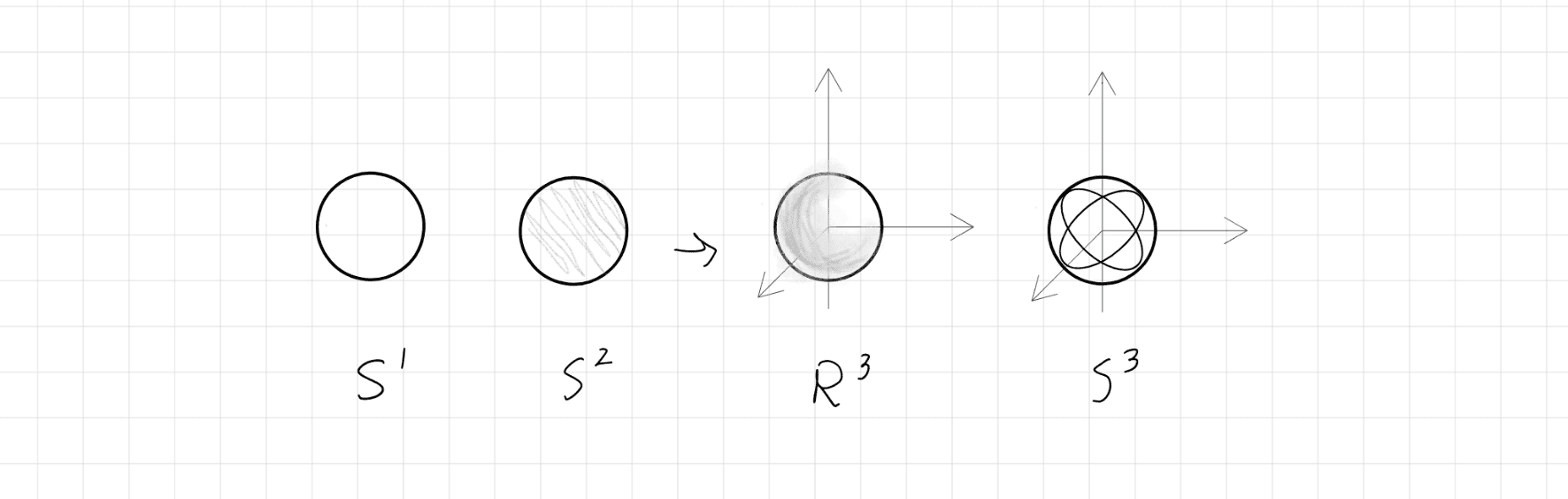
Topology
Topology studies structures that remain invariant under continuous deformation, rather than distance, angle, or area. It concerns structural invariance: which properties hold without tearing or gluing. In analysis context, topology provides an abstract framework to uniformly describe continuity, convergence, and other fundamental properties of mathematical structures.

Monte Carlo Simulation
Monte Carlo Simulation is a numerical estimation method based on random sampling, with its core idea being approximating theoretical expected values through numerous independent samples. Since many probability problems can ultimately be rewritten in expected value form, the Monte Carlo method is widely applied in statistical physics, probabilistic inference, financial modeling, and artificial intelligence. This article discusses the probability structure and numerical significance of Monte Carlo simulation from three levels: random sampling, sample averaging, and convergence.
Logic
Logic studies the structure of formal reasoning. Mathematical logic provides formal systems to describe propositions, inference rules, and truth structures, serving as important foundations for discrete mathematics and theoretical computer science. Logical systems are typically understood from four levels: syntax, semantics, proof theory, and model theory.
Bernoulli Trial
Bernoulli trial is the most basic discrete random model in probability theory. Its core is not building complex result spaces, but abstracting any phenomenon into binary event occurrence structure. This abstraction enables events to be probabilized and statisticalized, forming basic representations of discrete probabilistic models. Many statistical models and binary decision problems in AI can be rewritten as Bernoulli types. This article discusses how Bernoulli trials constitute the theoretical starting point of discrete randomness from three levels: event abstraction, indicator random variables, and uncertainty structure.
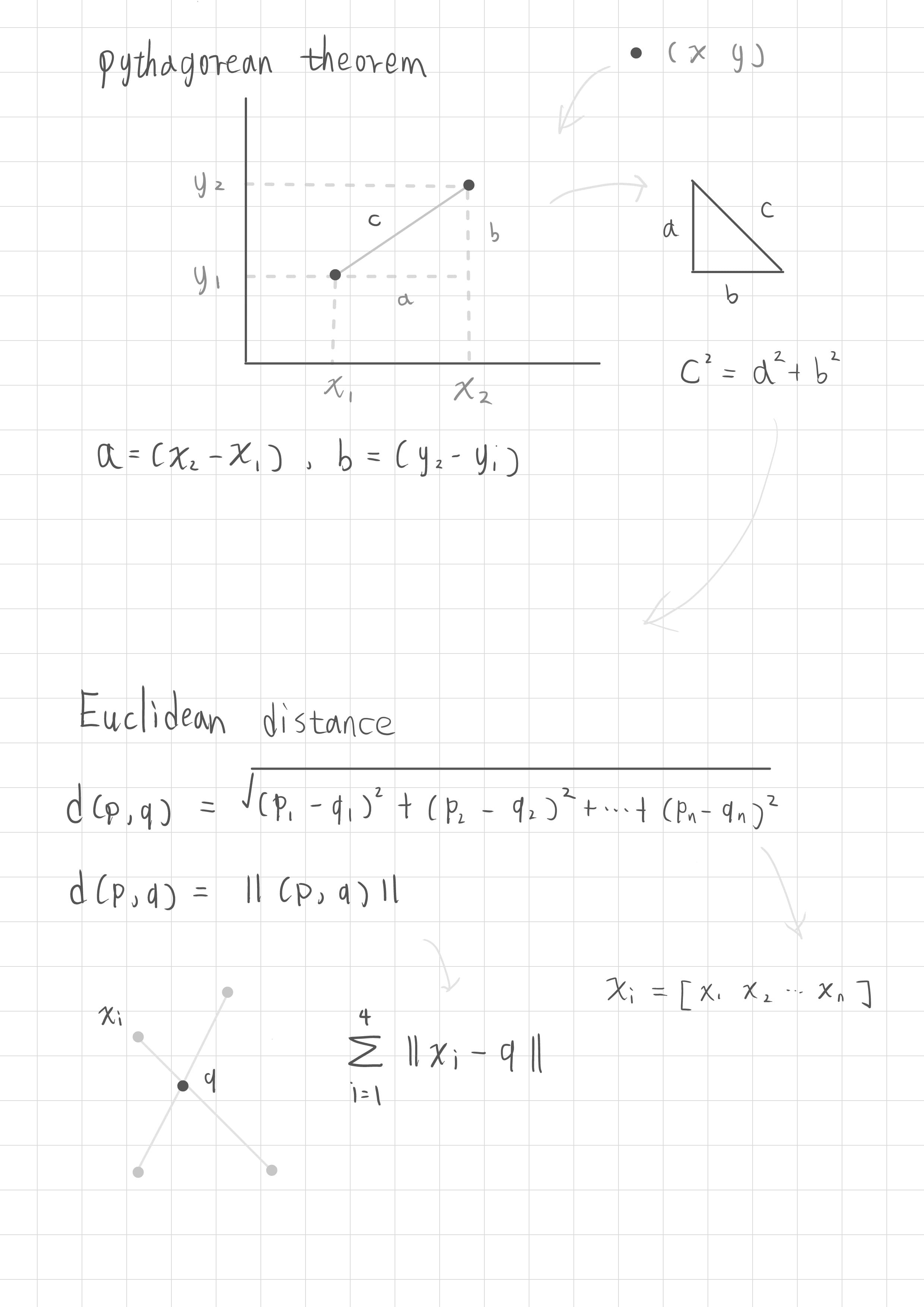
Euclidean Distance and L2 Norm in Vector Space
Euclidean distance is the straight-line distance between two points in vector space, originating from Euclidean geometry and widely used in machine learning, statistical analysis, and clustering algorithms to measure sample similarity. The Pythagorean theorem states that in right triangles, the hypotenuse squared equals the sum of squared perpendicular sides. This enables deriving straight-line distance between points in planes and spaces, naturally extending to n-dimensional space. For two vectors, this distance calculation extends to multiple dimensions.
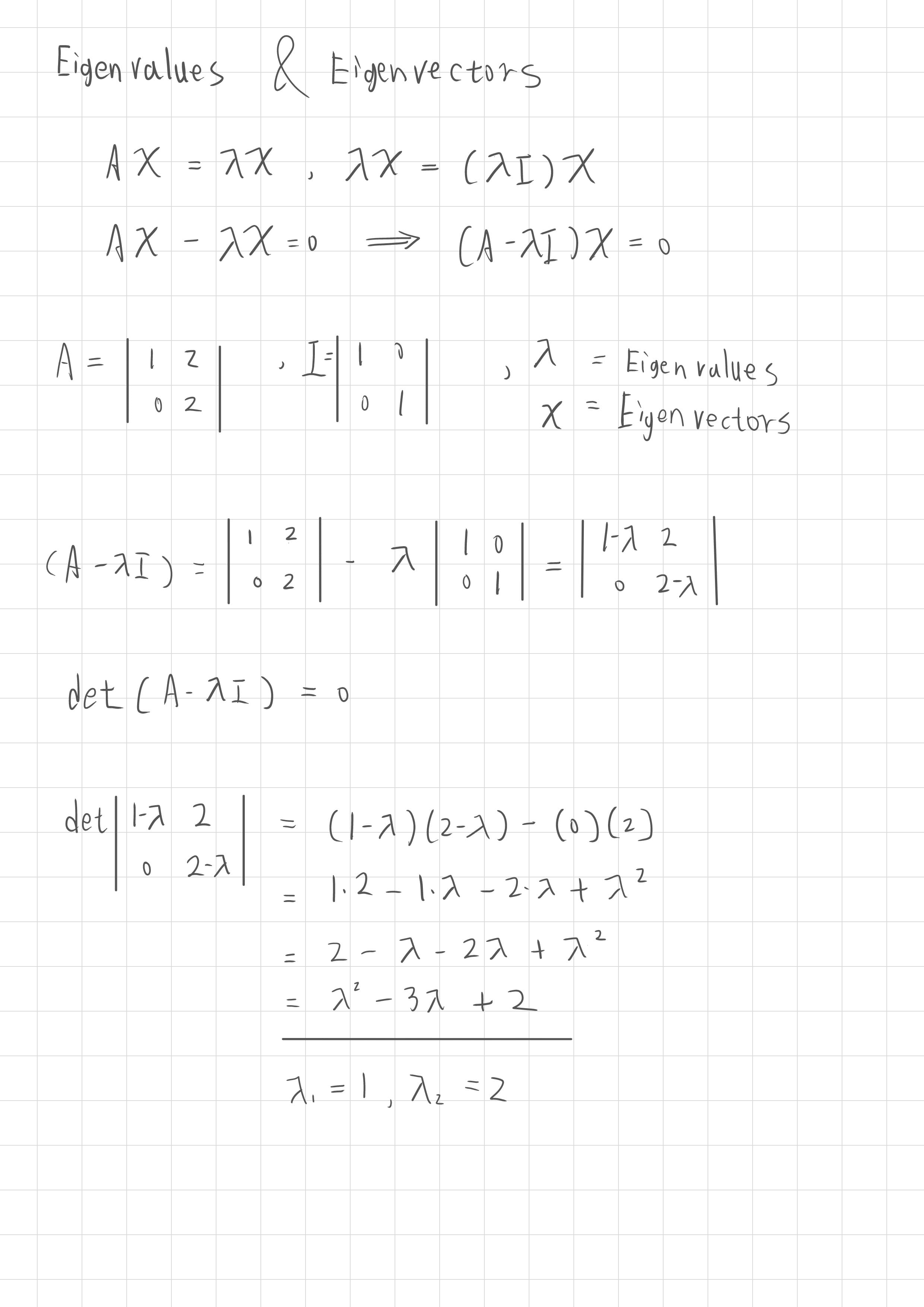
Eigenvalues and Eigenvectors Computation Methods
First step: solve the characteristic equation to find eigenvalues. Second step: find corresponding eigenvectors based on eigenvalues. Given an n×n square matrix A, if a non-zero vector X and constant λ exist satisfying AX = λX, then λ is the eigenvalue of matrix A and X is the eigenvector corresponding to λ.
Computer Science Mathematics: Discrete Mathematics
Note content emphasizes mathematics used in computer science and AI fields, organizing concept, symbol, and formula key contexts as quick reference, learning route planning, and direct application lookup. Used for marking element or item positions. Finite index interval addition operations. Finite index interval multiplication operations. Basic relationship of element belonging to sets.
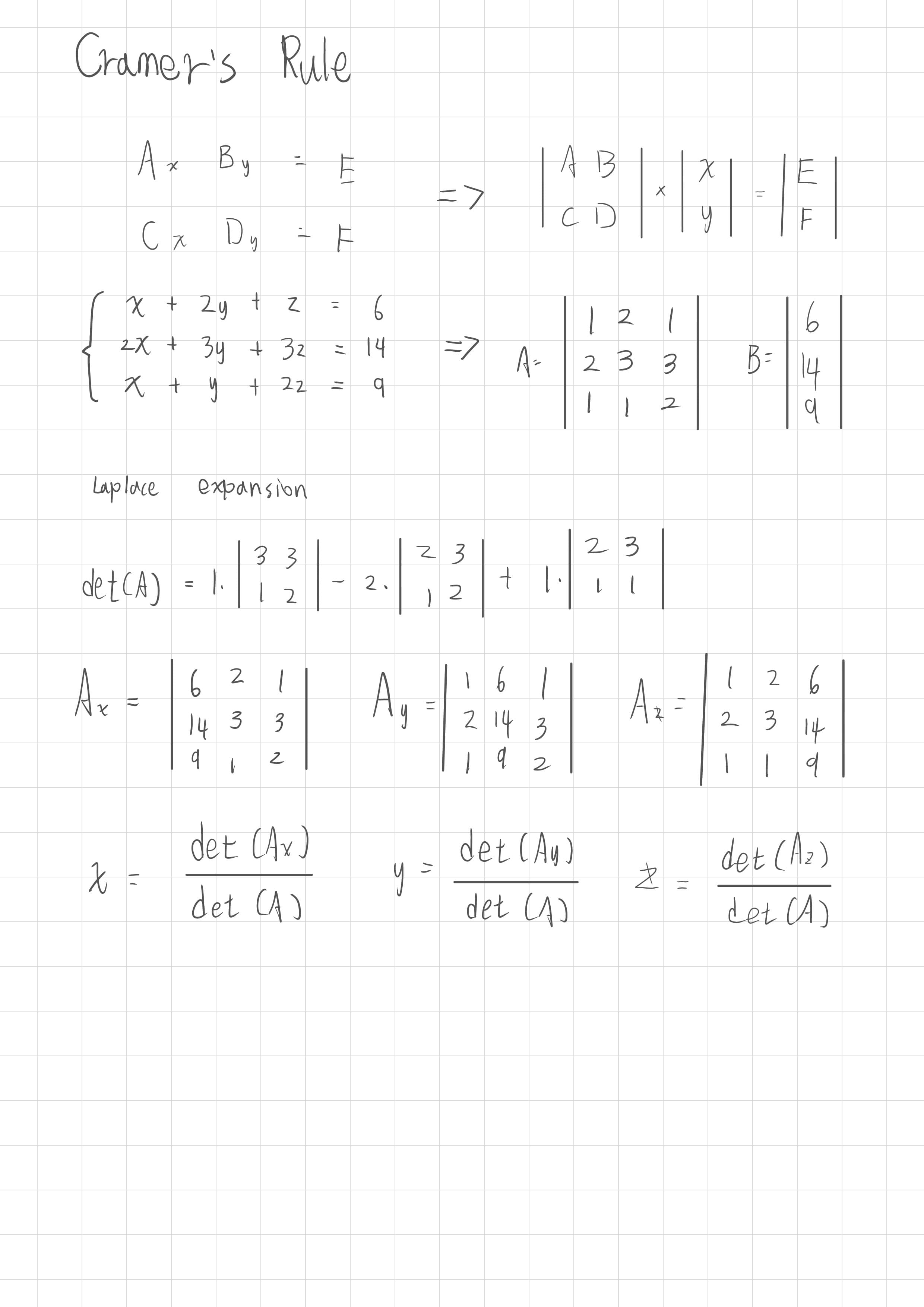
Computer Science Mathematics: Linear Algebra
Note content emphasizes mathematics applied in computer science and AI fields, providing quick reference of key contexts and formulas similar to mind maps, helping learning route planning or direct formula lookup. Matrix notation, vector definitions, matrix operations, determinants, eigenvalues and eigenvectors, and other fundamental linear algebra concepts.
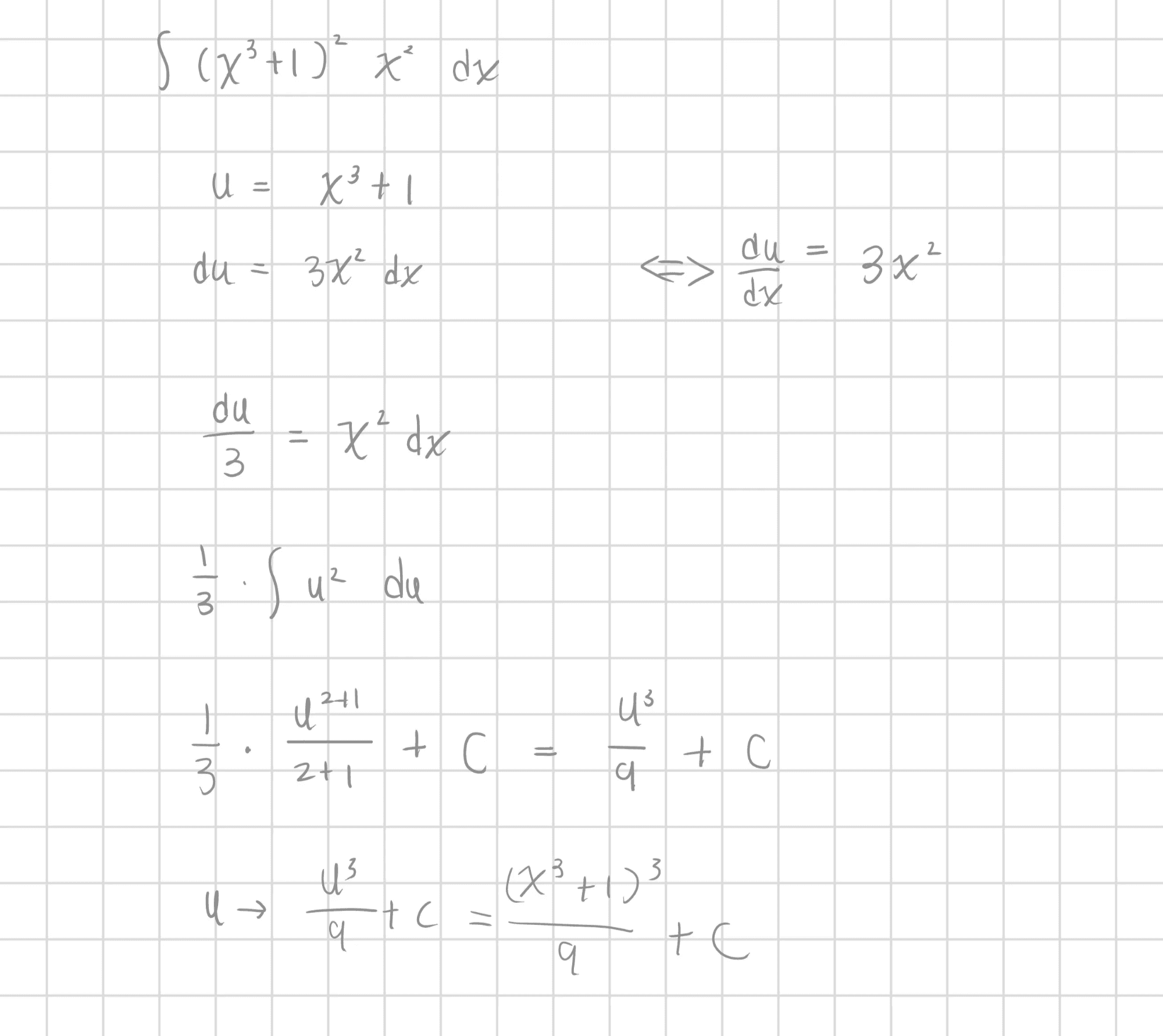
Computer Science Mathematics: Calculus
Note content emphasizes mathematics used in computer science and AI, organizing concept, symbol, and formula key contexts as quick reference for learning routes and application lookup. Sequences arrange elements by index; series sum sequence terms. For finite series, partial sums can be considered; for infinite series, convergence depends on partial sum sequence limits. Geometric series have first term a and common ratio r, with specific sum formulas.
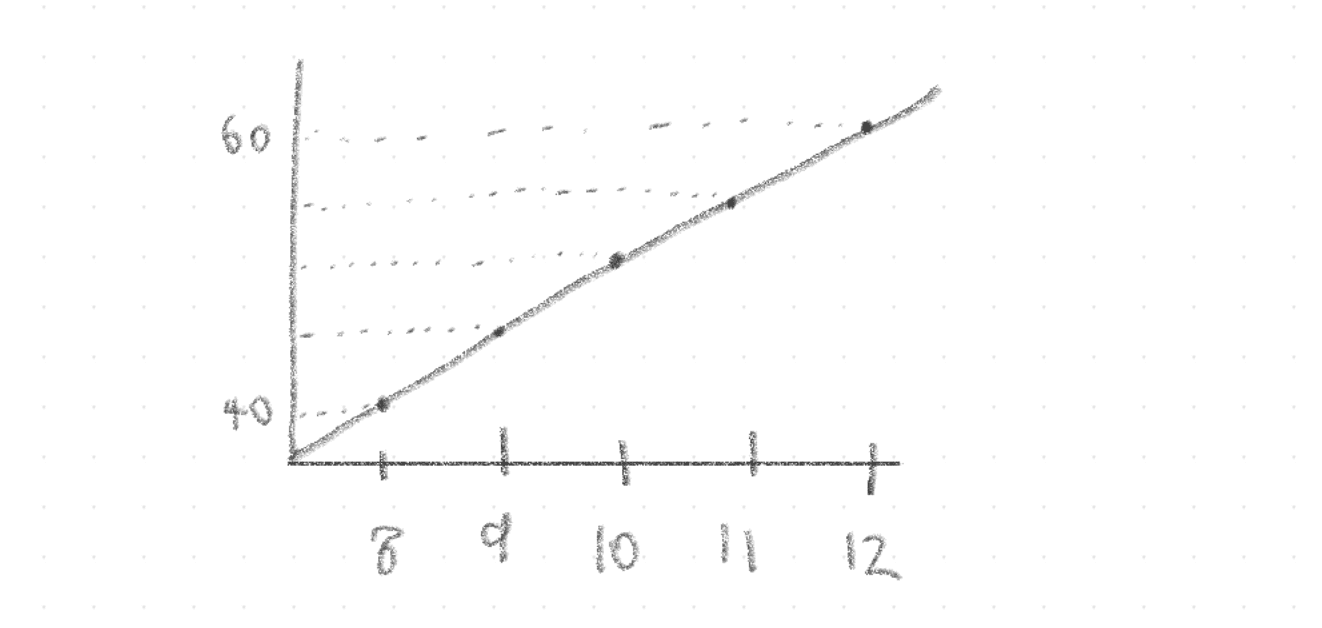
Computer Science Mathematics: Geometry
Note content emphasizes mathematics used in computer science and AI, organizing concept, symbol, and formula key contexts as quick reference for learning planning and application lookup. Slope represents rate of change between points, showing vertical change relative to horizontal change ratio. Vectors have both magnitude and direction. Mathematical representations formalize geometric relationships essential to computer science.